Showing posts with label New Product. Show all posts

Friday, January 15, 2010

Nexus One: Too Much Hype, Not Enough Marketing

Poor Nexus One. Despite earning mostly positive reviews and becoming an obsession in the tech blogosphere, the Google phone reportedly sold just 20,000 units in its first week. That's just 10 percent of the Motorola Droid's debut sales.
If those figures are correct -- they're not official, but calculated in a roundabout way by market researcher Flurry -- there a few takeaways as to why the Droid had better early commercial success than the Nexus One. You could argue that in-store Droid sales trump the Nexus One's online-only distribution, or that Verizon Wireless is a bigger carrier than T-Mobile, translating to more potential customers.
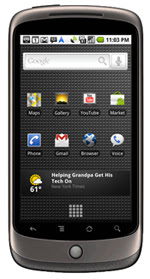
But even if you could buy the Nexus One in stores, and on Verizon Wireless, Google's marketing would still be problematic. Google plans to focus its marketing efforts online, within its own pages, the Wall Street Journal reported. That includes Google home page promotion (though I don't see any at the time of writing this), search ads and a Nexus One channel on YouTube. It's a very Google-like outlook on advertising, where all you need is a little online message here and there to make an impression. Verizon, meanwhile, relentlessly used the Droid to bash the iPhone, and AT&T. It approached the stage with the cockiness of a professional wrestler And it worked.
Google's approach just doesn't stack up. Phones are more than just a purchase. They're your constant companion, probably for two years, and like it or not, they convey a message and a lifestyle. The Droid's lifestyle is that of a manly man who favors function over form, unlike that pretty princess iPhone. The iPhone's image is one of smug satisfaction: Can your phone do this?
Google's in a tough position with the Nexus One, because it can't really knock either of those phones. Obviously attacking another Android phone makes no sense, and iPhone-bashing probably isn't in Google's best interests, because so many Google services -- Search, Maps, YouTube -- are tied up in the iPhone. Verizon can get away with an anti-iPhone campaign, but Google, which is selling the Nexus One directly, cannot.
There's hope for the Nexus One. Perhaps Google's online marketing strategy will be a slow burn, sinking in over many months as word of mouth spreads. Verizon Wireless took the shortcut by bashing the iPhone, but the Nexus One has a long road ahead.

Source: PCWORLD

Monday, January 11, 2010

'Roxxxy', world's first sex robot introduced

New Jersey company TrueCompanion and Hines has developed the world’s first “sex robot”. The robot called ‘Roxxxy’ has different personalities and responds to the sense of touch.
Roxxxy, is a female robot which acts as a life partner or mate for those who can’t find the 'real thing'. TrueCompanion claims Roxxxy “can carry on a discussion and expresses her love to you and be your loving friend. She can talk to you, listen to you and feel your touch.”
TrueCompanion introduced its first robot, Trudy, in 1993.

Sunday, January 10, 2010

Google Nexus One Specifications & Features


MSI launches two new Gaming notebooks-Bringing advanced processing technology to your notebook

Laptop specialist MSI launched its two latest GX series notebooks at the Consumer Electronics Show (CES) in Las Vegas, purpose-built for gaming addicts on the move. The new GX640 and GX740 machines come equipped with a high-specification designed to run the latest gaming titles smoothly and with the portability of a notebook.
"In the months leading up to CES we've seen huge advances in software and hardware, including Windows 7 and the new Intel Core i5 Arrandale processor and Calpella platform.” At the world press launch MSI's president Joseph Hsu alleged, “We're extremely proud to announce notebooks that make full use of this technology to significantly outperform their predecessors."

The Taiwanese manufacturer's notebooks come with MSI's own Turbo Boost technology which diverts system resources, using Intel's own Hyper-Threading system, for the fastest gaming experience, no matter what background operations are running.
Machines Features:
  • Built-in with Intel Core i5 Arrandale,
  • Built-in with Window's 7 operating systems,
  • Latest Graphics Media Accelerator HD system to run the latest PC games smoothly,
  • ATi's Mobility Radeon HD 3D graphics card,
  • Radeon HD 3D graphics card supports DirectX11 and renders game graphics in spectacular definition,
  • 25.6" LCD screen,
  • Five speakers, two above the keyboard, two along the front and a woofer to bring to life deep explosions in the base,
  • GX series notebooks promise to make your games sound great despite the machines ultra slim proportions,
The notebooks shouldn't cause any humiliation if you flip one open in a trendy cafe having scooped Germany's iF Product Design Award - the design equivalent of an Oscar.
The W, A, S and D keys - vital for game controls - have been highlighted in red to make them easier to spot and a luminescent touch sonsor control panel and independent number pad also improve game control.

The MSI GX640 and GX740 notebooks will be available in the UK from March 2010 and prices start from £999.

Saturday, January 09, 2010

CES 2010: The Year of the Tablet PC

Apple’s iSlate
Ah the illusive iSlate! Like most new Apple products we haven’t seen it, we’ve just heard of it—and the lack of details is driving us crazy. Apple did not (does not ever) attend CES, so there was no debut of the iSlate, but the company did set a press conference date for late January.
HP Multitouch Tablet
This unnamed HP tablet was announced at CES by Microsoft’s Steve Ballmer. The nameless tablet was runs Windows 7 supports multitouch gestures, and is due out in mid-2010 for under $500. HP-slate
Dell Android Tablet
Dell’s “tablet concept” features a 5-inch display, a 5 megapixel camera and is an Android-powered device. Dell’s being very hush-hush about any other specs and details concerning its new tablet. We’ll just have to wait and see.
Archos 9 PC Tablet
This poor guy was overshadowed by all of the “newer” tablets, like HP nameless one, because it technically came out in mid-2009. Microsoft’s Steve Ballmer announced this tablet as well during his CES keynote. The Archos tablet sports a 1.1GHz Intel Atom Z510 processor, a 60GB hard drive, 1GB of RAM, and offers networking via 802.11b/g Wi-Fi and 100-mbps Ethernet. Archos-9-PC-Tablet
Lenovo IdeadPad U1 Hybrid
Tablet or notebook? How about both—Lenovo’s new Ideapad U1 starts out as a lightweight, Windows 7 laptop running on a Core 2 Duo CULV processor and a 128GB solid-state drive, but if you remove the 11.6-inch display you’ve got yourself a stand-alone Linux tablet PC, powered by a 1GHz Snapdragon ARM processor with 16GB of flash memory. ideapadu1hybrid
Freescale Tablet
This year’s affordable tablet PC—the $199 Freescale Tablet. The Freescale tablet includes Wi-Fi, Bluetooth wireless connectivity, and also features a 3D desktop framework with touch screen/QWERTY keyboard support. The company says this $199 tablet also boasts a power-efficient ARM processor: the i.MX515 chip based on ARM Cortex-A8 technology.
Pegatron Tablet
Another highly overshadowed tablet PC—also announced by Ballmer during his keynote—doesn’t even have any glamour shots. Pegatron—spin off of AsusTek Computer—didn’t release many detail either. Neowin described the tablet as having thesespecs: An 11.6-inch touchscreen display, 1GB of RAM, 32GB of on-board storage, a Webcam, and HDMI-out.
Innovative Converged Devices’ Ultra and Vega Tablets
ICD has revealed a pair of Android 2.0 tablets, the Ultra and the Vega. The Ultra was on display at both Verizon and Nvidia’s CES booths since the two companies teamed up on the tabletsmodem and processor. The Ultra tablet has a 7-inch touchscreen and is powered by a 1GHz nVidia Tegra T20 processor, which lets you watch smooth 1080p video; the device also includes 4GB of on-board storage space, as well as a MicroSD card slot for further expansion.  The ICD Vega, has a 15.6-inch, 1366-by-768-pixel touchscreen and a 32GB solid-state drive.

Dell is serious about its Tablet


Dell gives the impression to be very solemn about its Android laden devices. After its initial push into the Android side of things with the Mini 3 smartphone, it has organized this MID that shows off of a 5 inch display and is all set to arrive on one of the U.S.-based leading networks. Dell, at the ongoing CES 2010, said this is just a concept as of now.
Whereas Dell hasn't discovered the specifications of this MID, official pictures have already been released. The only other thing that we know about this MID other than it being Android based and having a 5 inch screen is that there is a 5 megapixel camera too at the rear of the device. Oh, and it's has a SIM card slot as well thereby making it a cellphone - one of the biggest you will ever come across.
There is no word as to when one of these would be released for consumers around the world. One thing that's certain would be the fact that this would be one expensive gadget.

Nexus One will struggle

Nexus One; the search giant's first branded mobile phone unveiled. Then Google confirmed that Nexus One, and all subsequent Google phones sold via the company's online store, will be available unlocked for use on every participating carrier. Microsoft has weighed in on this development, specifically where Google is both offering Android to its partners and allowing one partner to benefit from having a Google-branded phone, concluding that it is a faulty strategy. The software giant says that Google will have a hard time attracting partners to its mobile operating system after introducing its own handset, even if it is developed by HTC.
In the stir of the opening of Google's Nexus One smartphone, Microsoft has attacked the company's mobile strategy. Google’s Android mobile phone software will struggle to make a key impact in the market now that the company has launched its own mobile phone, the Windows manufacturer has claimed.
Robbie Bach, the President of the company’s entertainment and devices division, said that so long as Google makes its own handsets, such as the new Nexus One, other phone manufacturers would hesitate to work with the Android mobile software platform because they would fear that they would never be a top priority for the search company.  “Doing both software and hardware in the way they are trying to do both is actually very, very difficult,” Bach said in an interview yesterday at the Consumer Electronics Show in Las Vegas. “Google’s announcement sends a signal where they’re going to place their commitment.”
Google may have a hard time convincing their licensees that they're not in competition with them. Still, Google has at least one advantage over Microsoft: Android is free for licensees to put on their devices. If Google started off by launching the Nexus One and then began distributing Android, it would be a big problem. Since it's the other way around, we must remember that gratis is an addiction hard to drop once you've had it for a few months.
When Google launched the Nexus One on Tuesday night, however, both Motorola and the phone’s manufacturer, HTC, joined the search giant on stage. Motorola Chief Executive Sanjay Jha confirmed that his company was already working on a range of new Android devices, even though many in the industry consider that the new Nexus One has largely stolen the thunder of the Motorola Droid handset.
Mobile network operators around the world, too, are apparently keen to get their hands on the Nexus One. Vodafone have confirmed that they expect to be the first to bring a Nexus One-subsidizing tariff to the UK market, although T-Mobile, which is already partnering with Google in the USA, has also held advanced talks with the company in Europe.

3 Reasons The Google Nexus One Won't Live Up To The Hype

Google played it smart unveiling the Nexus One smartphone, the latest Google  Android offering, while CES is in full swing in Las Vegas. Why not take the opportunity to steal a little thunder away from all of the other device makers looking to make a splash on one of the world's biggest consumer technology stages?
And it worked. The Web and tech news outlets exploded with word of what the Google team had hatched with the Nexus One smartphone.But here's the rub: The Google Nexus One smartphone is a flavor of the week. They hype is going to die and the device, despite how cool and powerful, will crawl back under the shadow of the all-encompassing Apple iPhone.
Why will the Google Nexus One fail to live up the hype? Here are three reasons:

1. T-Mobile will be the Nexus One's first carrier. T-Mobile has fallen to No. 4 behind the big three carriers -- AT&T, Sprint and Verizon. And, despite T-Mobile recently completing upgrades to its 3G network to boost speeds to up to 7.2 Mbps, its network coverage through the U.S. isn't as pervasive as its competitors. The network can be the fastest in the world, but if you can't catch a 3G signal, all the speed in the world won't help. Granted, the leap to Verizon that the Google Nexus One smartphone is expected to make a few months after launch will help, but by then its time on T-Mobile may have worked against it. And, yeah, for a few extra bills an unlocked version is available, but that's a spicy meatball for an as yet unproven device.

2. Google Android isn't quite there yet. Google Android has made great strides since it made its October 2008 debut in the T-Mobile G1. A host of hot Android phones have since hit the market, most recently the Motorola Droid, which has captured the hearts of Google Android lovers everywhere. But Android hasn't evolved enough to reach the iconic status the Apple iPhone has reached. Despite Android phones getting slicker from a hardware standpoint, the software hasn't kept up. While the Nexus One is coming equipped with Google Android 2.1, so far Android hasn't proven itself as a strong enough contender in the OS race. That could all change, but right now Google Android is still a "me too" play.

3. Potential buyers are already suffering Google Nexus One fatigue. This smartphone has been inescapable. Everyone thought Apple went overboard with its product placement, advertising and marketing for its initial iPhone launch, which has been scaled back with each subsequent iPhone release. But Google is beating the proverbial dead horse. Granted, all of the media attention is part of the problem too. But take a look at the main Google search page today. Do you see it? Yup, there it is. Just under the "Google Search" and "I'm Feeling Lucky" buttons it reads: "Experience Nexus One, the new Android phone from Google" with a thumbnail-size image of the Nexus One and a link to more information. While a brilliant placement and marketing ploy, users will grow tired of being bombarded with Nexus One branding and consumer fatigue can often hurt sales.

Source: CRN.COM

.

Wednesday, January 06, 2010

Nexus One review


While Google’s Android has powered other phones, this is the first one where the search giant has specified the design. The pencil-thin Nexus One is built to feel like a genuine object of desire.
And the Nexus One offers features the iPhone lacks, too – the camera’s resolution is 5mp, compared to Apple’s 3mp, there are satnav capabilities built in that cost Apple users extra, and a fast processor means the Nexus One operates quicker than any phone currently on sale in the UK. Web-browsing is impressive, although in the UK is likely to lack the multitouch capabilities that have been available on previous versions of Android. Automatic online synchronization of camera photos is also impressive. It’s effective voice operation, for controlling the phone and writing emails, however, that is the most surprising feature. This is the first time I’ve seen a version of that technology that is genuinely useable.
In the burgeoning market for additional applications, however, Apple’s iTunes Store offers 115,000 compared to the 20,000 or so in Google’s Android Marketplace. That means that there are currently far more games, tools and clever tricks available to iPhone owners. As more phones start to adopt Google’s operating system, however, Android is likely to catch up fast. And while Android can run a number of Apps at once, the iPhone can’t.
Does the Nexus One feel quite as well put together as the iPhone? No, although it’s close enough to make no meaningful difference. What Android handsets can’t do, however, is plug in to your music collection as seamlessly as an iPod or an iMac. And that’s the biggest problem Google faces – an iPhone is a web-browsing, every song in your pocket, phone call making pleasure to own. It’s part of an entire ecosystem, with accessories, covers, speaker systems and even ties that are built to house iPods.
But the Nexus One does plug in effortlessly to the web, social media, email, calendar, search and contacts functions; perhaps the company that dominates web search should simply start making the computers as well.

Apple tablet could land By March

Apple Inc. plans to unveil a long-awaited tablet computer this month which may begin to ship in March. A Taiwanese components supplier has notified longtime Apple analyst Gene Munster at Piper Jaffray that it is "likely" the tablet could be available by late March. Munster says he has not been briefed by Apple on the product.

Munster and other analysts have speculated the tablet — expected to be introduced in late January — will come with a 10-inch touch display that lets consumers read newspapers and books, watch movies and TV, play games and use the Internet.

"It's a combination of e-book reader/Web-surfing device/e-mail/video player," Munster says. Third-party applications, which are so popular on the iPhone, will extend the tablet's functionality and "really let it rip," he says.

Published reports have speculated the tablet could cost $1,000 and could include a Wi-Fi subscription. USA TODAY could not independently verify the reports. Apple declined to comment.

An Apple tablet that is bigger than an iPhone and smaller than a laptop "is likely to be a terrific product, but unless it meets some need not currently met by a netbook or iPhone, it's a limited opportunity," says Charles Wolf, a longtime Apple analyst at Needham & Co. Still, Apple's entry could significantly perk up the $950 million U.S. market for tablets. Sales declined 25% in 2008 and were expected to drop again in 2009. "It has been a disastrous market because there has been no champion," says David Daoud, an analyst at IDC.

Munster expects Apple to sell about 2 million tablets in its first year. The company has approached some book publishers with proposals to distribute content, he says.

The product already has commanded attention ahead of the Consumer Electronics Show this week in Las Vegas, where several tablets are expected to be unveiled, including one from Notion with paper-quality screen graphics for easy reading outdoors.

Nexus One Phone Officially Pits Google Against Apple


The Nexus One Phone is anticipated to be wider but slimmer than Apple's market-leading iPhone and faster than Motorola's Fortune 500, is the first handset to be designed, marketed and sold exclusively by Google.


It will run the search leader's Android operating system on a high-speed processor with the complete binding touch-screen and virtual keyboard of the smartphone.
Google has alleged little about the Nexus One since giving the device to its employees last month for testing. But it is expected to reveal its plans for the phone during a press conference about the Android system at its Mountain View headquarters in California today.
Early assesses imply the Nexus camera, that comes with a flash, is preferred to that on the iPhone, and it is expected to win the battle over battery life, with the facility to hold full charge for at least 24 hours. It will also come complete with a light sensor, proximity sensor and an accelerometer.
But the Nexus will fall short of the iPhone in the applications arena, with around 16,000 available for Android phones compared with 100,000 at the Apple App Store.
The phone, which stores audio and video, will also not offer a connection to Apple's iTunes online music library.


CES 2010 Flashpoints: The platforms for the next decade in electronics

Every year, the Consumer Electronics Show is a gauge of the directions in which platforms are moving, a barometer of the evolution of functionality. In no doubt, we see ample of tidy toys, many of which wind up either being for kids or making us feel like kids. And definitely, we hear ample of slackly coupled metaphors that play to our need to be excited, like how a certain device unleashes connectivity or harnesses the power of disruption -- phrases that read like they were assembled using that word game you play with refrigerator magnets. The devices, known as tablet computers, have screens of between 7in and 10in in size, and dissimilar traditional laptops, they use an on-screen "virtual" keyboard, like that used by Apple's iPhone, rather than a physical keyboard.

From March Apple is likely to open its own tablet computer, alleged to be named the iSlate and competitor computer makers are thought to be keen to expose their designs ahead of any Apple press conference.

Freescale, A US company, has shown off a archetype device that could be used by other electronics manufacturers to create advanced tablet computers that will cost less than $200. The 7in touch-screen tablet turns on quickly and connects instantly to the internet via Wi-Fi or the mobile phone network, and provides a full day of battery life.

Dozens of other manufacturers will also use the Consumer Electronics Show to showcase their tablet devices. Notion Ink, an Indian manufacturer, will unveil its tablet computer, which runs Google's Android operating system and features an energy-saving 10in scratch-proof touch-screen, and will allow users to watch high-definition video on the move, and to surf the internet and send emails. Dell might also launch an Android-based tablet device, while gadget fans will be hoping that Steve Ballmer, Microsoft's chief executive, uses his keynote speech on Wednesday evening to share more details about the Courier, a dual-screen tablet computer and ebook reader that Microsoft is rumoured to be working on.

"Missing link" between PCs and smartphones" Henri Richard, senior vice president of sales and marketing for Freescale, said "The PC has been stale in terms of its ability to innovate. Smartphones have been making progress, but they have limitations," he said.

Analysts at DisplaySearch expect the tablet computer market to be worth $3.5 billion by the end of the year, a significant figure for an emerging device category. "We're talking about a brand-new market," said John Jacobs, a senior analyst with DisplaySearch.

The tablet revolution is being driven by the growing ubiquity of wireless internet connections, and consumers' desire to surf the internet and watch videos on devices that are bigger than a smart phone, but smaller than a conventional laptop.

Glen Burchers, director of consumer product marketing for Freescale, said his company's tablet computer was aimed at people aged between 12 and 30, who wanted a web-friendly device with a bigger screen than a smart phone to surf sites such as Facebook and YouTube.

"The tablet is the newest category of mobile device, and we believe it has the potential to be the fastest-growing," he said. "Everyone who uses the internet finds value there."

New Sony Ericsson Kanna Phone leaked


The phone-terrain now gets one more drop in its pail. Now it appears that Sony Ericsson failed to hide from view its brand-new phone from a spark of camera for so long. According to FoneArena, in the past days there was a Sony Ericsson phone that was leaked for everybody to feast eyes on.
Tagged as ‘Kanna’, the eye-catching device runs on Symbian S60 5th Edition OS and comes equipped with a 3.2-inch touchscreen display, a highly impressive 8.1-megapixel camera and Wi-Fi connectivity, reveals FoneArena.
Seemingly, other leaked details of the new Sony Ericsson Kanna include 360 x 640 pixels resolution, QWERTY keyboard, microUSB port, and that weighty 8.1-megapixel camera with autofocus.
It seems that, the satiny phone is a sister of Kurara. The compelling camera further lends support to 720p HD video recording and also features a 3.4mm audio jack.
The newest offering from Sony Ericsson is likely to be announced at the Mobile World Congress, on February 14, 2010.

Saturday, January 02, 2010

Apple Orders 10 Million Tablets? Sound Fishy


Today's Apple tablet rumor has an optimistic zing to it--and maybe that's a great way to close out a dreary 2009. According to a blog post by former Google China president Kai-Fu Lee, Apple plans to produce nearly 10 million tablets in the still-unannounced product's first year. Lee worked for Apple more than ten years ago and left Google earlier this year, according to published reports.
That figure--10 million--seems awfully high for a consumer product that's charting unknown territory. The tablet (or iSlate or iPad, if you prefer) would target an untapped market, if rumors of the device's form and functionality are true. True, a few tablet-style browser/media players are either already on the market or are arriving shortly, but none has garnered anywhere near the attention of the Apple tablet.
I did some checking at Apple's site to see what sales figures were like for the iPhone in its first year. Here's the breakdown:
Q3 2007: 270,000 units
Q4 2007: 1,119,000
Q1 2008: 2,315,000
Q2 2008: 1,703,000
Add up the quarterly numbers, and Apple sold just over 5.4 million iPhones in the handset's first year. (I also tried to get first-year numbers for the iPod, which launched in November 2001, but Apple's financial reports didn't break down iPod sales back then.)
If Lee's blog post is to be believed, Apple plans to sell nearly twice as many tablets as it did iPhones in the product's first year.
Call me a pessimist, but that's hard to believe. Remember, the iPhone was entering a well-established cell phone market when it debuted in 2007. People had used cell phones for years. They liked cell phones and understood their value. Apple's pitch back then: The iPhone is better than any other cell phone on the market. Millions of customers agreed, and the rest is history.
The tablet? Well, that's a much harder sell. The iSlate is sort of a big iPod, but not really. It performs a lot of notebook-like functions, but it's not really a notebook either.
My point is that Apple will need to educate its target market. And that's why I seriously doubt the company expects to move 10 million tablets within a year.
Then again, Apple has proven the pundits wrong before. What do you think?

Tuesday, December 29, 2009

At last! Apple tablet is slated for launch in January

Apple are expected to unveil a revolutionary new gadget in January, which will take the company back to its computing roots.
The tablet computer will have a 10.6" touchscreen and allow users to surf the web, watch TV and read eBooks, according to industry insiders.
The device will not have a mouse or keyboard and instead resemble a large iPhone. It will help Apple take control of the wireless multimedia market.
Speculation has reached fever pitch on technology blogs that the device, dubbed the iSlate, will be unveiled at the Apple conference in San Francisco on 26th January. Apple registered the domain name iSlate.com in 2007.
Previous launches at the New Year event include the original iPhone and MacBook Air.
Rumours and counter-rumours have always surrounded fledgling Apple products. Previous reports suggested an Apple tablet would have a 7" screen and be called the iMod.
Apple filed a European design trademark for a tablet-style computer way back in 2004 and numerous tablet patents have been popping up ever since.
However, the plans were put on the back burner because the technology simply wasn't advanced enough to fulfill Steve Job's vision.
 Now sources at various Asian manufacturers have confirmed they are building components for a new Apple device, due to be shipped in the third quarter of 2010.
Innolux, the panel-making subsidiary of the Foxconn Group will supply the touch panels, according to DigiTimes.
A Taiwanese newspaper reported Cheng Uei Precision Industry will manufacture 'connectors' for the device. 
Apple CEO Steve Jobs launched Apple's Macbook Air in 2008. Could the Apple Tablet follow in 2010?
Apple is also rumoured to be in talks with media groups such as Disney and CBS to secure regular content for the tablet.
The company revolutionised the music and mobile phone industry in the 21st century with its streamlined and intuitive gadgets including the iPod, iPhone 3GS and iPod Touch.
Shares in the company have gained almost 150 per cent thanks in large part to the popular iPhone and hugely successful App Store. They closed at a record high of $209 (£131) in Christmas week.

Saturday, December 26, 2009

Apple tablet finally a reality?


After word spread that Apple had rented a stage for a "major" announcement in January, the rumor mill was at full speed that the oft-rumored Apple-branded tablet may finally be a reality.

The Financial Times, the Wall Street Journal and Piper Jaffray analyst Gene Munster all had stories over the past few days, claiming that a "a major product announcement" was set for January. Munster gives it a 50/50 chance of being the tablet, while the WSJ says Apple is already debriefing media companies on how their content would work on the devices.

Munster said the tablet would likely be 7-10 inches, and would be priced between $500-700, giving it competitiveness in the netbook market without actually being a netbook. The tablet's OS would be a tweaked iPhone OS, or a multi-touch-enabled Mac OS X.

Additionally, the device could have 3G wireless integrated, and could be sold through cell phone carriers. Covering all bases, the tablet could also include e-book software for books that could eventually be sold through the iTunes Store.

Thursday, December 24, 2009

Sony X-Series laptop review


TWe’ve admired the thin and light MacBook Air before, and come to terms with our disappointment that Windows users didn’t have a comparable equivalent. The recent Nokia Booklet 3G comes close, but if you want something more powerful and with a screen approaching the Air’s 13-incher, this new and beautifully designed machine from Sony has a lot going for it.
It’s spectacularly slim and in certain configurations qualifies for shouting out that it’s the World’s Lightest Laptop from behind its demure gloss-black casing. But does it do the business? Pretty much, yes. The 11.1-inch screen is bright and pin-sharp with HD resolution despite its modest size. The keyboard is expertly spaced so that it’s easy to type on even for longer documents. Small laptops traditionally have poor mouse pads, but the one here is highly usable.
Onboard memory is not outstanding at 2GB, but nippy enough to work well and at speed, even when multitasking. The hard drive (choose from 128GB or 256GB capacities) is also fast and responsive as it’s the light flash memory kind. And if you’re not in a wireless hotspot, the sim card slot hidden under the battery means you can connect through the 3G phone network, too.
This is a really excellent laptop, delivering classy looks and performance. It is absolutely unbeatable for portability. But the high price, though good value given the components, just denies it a fifth star. Even for your CEO.

Apple iPhone coming to Vodafone on Jan 14


But shoppers hoping for a price war between the major network operators will be left disappointed – Vodafone's cheapest deal for Apple's 16GB iPhone 3GS works out more expensive over the lifetime of the device than any of its competitors.
People signing up to Vodafone's £40 per month, 18-month contract also have to pay £89 for the iPhone itself, meaning they will have spent £809 on the phone and monthly payments by the time their contract expires.
O2 and Orange, which also offer the iPhone, are a significantly cheaper than Vodafone, but there is just 84p difference in price between the two: a 16GB iPhone 3GS on O2's £29.38 per month, 18-month contract will cost users £713.82 over the lifetime of their device, including the £184.98 initial outlay for the phone; the same handset on Orange's £29.36 per month, 18-month contract will cost £712.98 over its lifetime, including an upfront cost of £184.50 for the handset.
Supermarket giant Tesco, which started selling the iPhone last week, represents the cheapest deal for shoppers, who can choose between a 12-month or two-year contract. The cheapest monthly tariff is just £20, but shoppers will have to pay a whopping £320 up front for the 16GB iPhone 3GS.
The number of free minutes and texts available varies between networks and tariffs, and will be a key consideration for shoppers as they try and decide which contracts represent the best value for money for their needs.
But mobile phone experts have warned that purchasing decisions may boil down to more than just cost. O2's network, which has suffered frequent crashes in recent months, has gone down again, leaving some iPhone users unable to make or receive calls or surf the internet.
"Consumers who were hoping that with four networks vying for a share of the iPhone market that a price war would ensue, are likely to be disappointed, particularly those who have been holding out for Vodafone's announcement in the hope of picking up a New Year bargain," said Ernest Doku of mobile phone comparison site Omio.
"The networks are battling on the fronts of quality of call reception and data usage limits, rather than the cheapest deals. It will be interesting to see if their stance changes in the New Year, when the feeling is that the real battle for market share will commence."

Wednesday, December 23, 2009

The Truth About Intel's New Netbook Chip


Business users should wade carefully into the netbook marketplace, which I know is enticing this holiday season. The machines remain artificially constrained so as to avoid creating competition for pricier laptops.
If you need a computer with limited performance--as in basic applications running one or maybe two at a time, hampered by a lack of memory--then netbooks are an acceptable option.
Being small and light, often with excellent battery life, has its selling points. Even then, it helps to have small fingers for those tiny netbook keyboards.
I am not trying to talk you out of a netbook purchase, just trying to frame expectations. If all this is acceptable--like because it is a second or third computer--then Merry Christmas and I hope there is a netbook under the tree for you. Take it to work and have fun. Or take it out and find some mobile work tasks made more convenient.
As for the N450 processor, I am not sure it really matters that much, especially since it won't be showing up in netbooks for months. And since a $300 computer is considered almost disposable these days, you can always upgrade later.
As long as the artificial barrier of 10.2-inch screens and 1MB RAM remains, netbooks will remain fine for some users, but not up to the task of real business computing. I say this not out of PC chauvinism but because I used to use a netbook as my primary portable and abandoned it for something more powerful.
Today, I carry the netbook when I want to go someplace that I know has Wi-Fi and want to be able to check e-mail and do simple writing projects or run a couple of specialized applications I need for work. And for that, the netbook is fine. Trying to run even two apps simultaneously is, however, an invitation to slow-as-molasses performance.
Mostly, I blame this on 1GB memory, but the 1.6 GHz. processor doubtless plays a part.
Need I mention that netbook performance for entertainment apps can be disappointing? Lacking DVD drives, well, you understand what that means. Hope you like Hulu, and even that can be disappointing on the netbook. Though the N450 will help with slightly improved graphics, when it arrives.
If you are willing to live with these limitations, none of which are solved by a smaller, lighter processor offering a teensy speed bump and lightly improved graphics, then enjoy a new N450-based netbook, when they finally arrive. Or buy a current model, as they aren't hugely different.
I am impressed by a blog, over at The Atlantic, which challenges the assumption that Intel/Microsoft need to cripple netbooks to protect their higher-end machines. Daniel Indiviglio makes the point that lower prices lead to more sales and in the end the two companies would end up with about the same amount of money they'd get from notebooks anyway.
I don't entirely buy that argument, but it is sad when companies that have done so much to promote "smaller, faster, cheaper" over the years are now purposely holding back.
Without Intel and Microsoft pulling the strings, we would have a nice continuum of machines starting about where netbooks are today and smoothly leading right into higher-end laptops.
Customers would be free to choose the tradeoffs they want to make, rather than being forced to accept limits that Microsoft and Intel, through control of the OS and processor, have built-into netbooks as a group.
It would be nice to think that the Atom N450 will make netbooks live up to their promise, but that is simply not the case.